Tuesday, 3 April 2018
Wild flowers in the park
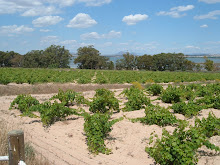
Here are some of the pretty wild flowers I saw on my morning walk. Most of these are on the common just outside the park, but can be seen growing alongside the trails in the park itself.
Thursday, 15 March 2018
Fish transfer 2018
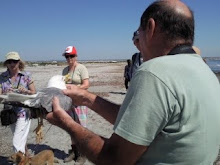
A group of Volunteers of La Mata met today to transfer 8 fartet (Spanish toothcarp) to the lake of Torrevieja. This time all those present had a chance to catch the fish with a small net and to transfer them to a small tank in which they were carried to the place they would be released. Sylvia an official at the Park, explained that these small fish are unique to the Valencian Community and therefore must be cherished as such. A breeding program within the Park centre has successfully bred these latest examples. The group walked to the Acequión canal where the water is less saline so as to avoid a major shock to the the fish, which have been bred in slightly less saline water than the Lake itself, and they were then released to swim free.
It was a beautiful morning, calm and quiet and we were also lucky enough to see herons which have come here to breed. A most successful visit to the Park.
Tuesday, 27 February 2018
Caterpllar nests - Beware!
These nests are in the pine trees just as you approach the cemetery at La Mata
Beware! They'll drop soon....
Thursday, 15 February 2018
New post on Expat Focus
The land known as the Parque Natural de la
Mata y Torrevieja belongs to the state, and parts of it are rented to vineyard
owners. In 1988 it was declared a protected area and a year later declared a
National Game Reserve. In 1995 it became a Parque Natural. It is the
southernmost nature park in Valencia province and covers an area of 3700
hectares, 2100 of which are water.
It is important for its vines, its salt,
its bird population, its vegetation, and its tourist attractions which include
regular educational talks and accompanied walks.
Vegetation
The park vegetation is either natural or
cultivated vines, which have withstood plagues due to the salinity of the air
and soil. The vines are irrigated naturally by rain and dew, and the grapes are
either made into vinegar or wine. A recent project focussed on developing a
quality white wine, supervised by an expert.
Salt
production
The water of the lake – a salt lagoon- enters through a canal leading from the sea
through the park, propelled by gravity is controlled by a lock. It is important
to keep the balance of salt and water level correct. Fish and shellfish enter
in this canal. Salt water is then pumped underground from La Mata lake into
Torrevieja lake, where the salt sinks to the bottom of the water and becomes
solid blocks which are extracted and washed at least three times to remove all
mud. These blocks are cut and lifted with special tools onto a conveyor belt to
the harbour. From there they are transported to northern Europe and worldwide.
Torrevieja lake is the second largest salt producing lake in the world. The
salt is used in households for cooking, in the construction industry for roads
and in the chemical industry. The area around the lake was divided into strips
of land, like allotments, and watch towers stood to prevent thieves from
stealing the highly sought-after salt.
Other
industries
La Mata was once a centre for soap
production, as the plants around the lake are particularly useful for their
tolerance of highly saline soil. Esparto grass also used to be cut and used to
make baskets and sandals.
Birds
and fauna
A large number of ducks take refuge in the
Parque Natural during the hunting season, and it is an important resting place
for migratory birds. There is a variety of terrain such as marsh zones, reeds
and rushes, and woodlands, which means a range of habitats for the birds, of
which there are over 100 species, including avocets, black-winged stilts,
terns, gulls and grebes. Flamingos are frequent visitors, and kestrels,
cormorants, herons and ospreys can be seen. There is a picnic area known as the
Pinada where from time to time we can see badgers, lizards, squirrels, snakes,
and further varieties of birds including hoopoe, fly catchers and woodpeckers.
One source of food which is of particular interest is the artemis salina, a
tiny crustacean on which numerous birds feed, including flamingos, which scoop
up volumes of them when they stoop to immerse their beaks. A further food
source is the larva of the chiromoid mosquito.
Flora
and trees
Aleppo pine trees and other pines provide
shade in the hot summer months, as well as eucalyptus. Esparto grass and iris,
wild gladioli, marigolds, daisies and poppies can all be seen in Spring,
visited by swallowtail and marbled white butterflies. The dangerous
processionary caterpillars also make a regular annual appearance and we have to
be careful to watch out for them when walking with our dogs and little
children.
History
La Mata lagoon was used as early as the C14
when the Crown gave it and Torrevieja lake to Orihuela to develop a possible
fishing industry, but the idea never took off as the water was too salty even
for the fish. In the C18 the State took the lake over and that’s when the salt
industry was born. Eventually salt extraction moved to Torrevieja lake.
Activities
There are two main walking routes: one of them
is enhanced with hides for birdwatchers and a picnic area for visitors, and the
other is a cycle route which rises to the dovecotes on top of a gentle hill.
The cycle track is some distance from the edge of the lake so as not to disturb
the water fowl. An information and research centre at the park entrance has
display boards about the park, a model artemis salina, and photographs of some
of the birds to be seen. Various ecological and educational projects and
activities are organised from here, including re-introduction of certain species
and monitoring of others. There is a group of mixed nationality volunteers who
support the work of the park wardens. They meet at 10.00 a.m. in the park
office on the first Saturday of every month excluding August to discuss plans
for projects undertaken jointly with, or under the supervision of, park
personnel. Among their duties are patrolling the paths for signs of damage or
abuse of park rules (e.g. dogs off leads), litter picking, removing invasive
species and planting indigenous ones, surveying the park’s flora and fauna,
protecting shelducks from predators, making wooden signs, placing nesting boxes
on trees, and counting and monitoring species of birds and plants. They also
participate in regional events related to their work in the park, and they
enjoy a lively social life. New members are always very welcome! Their blog
site is https://lamataparkvolunteers.blogspot.com.es/
Sunday, 4 February 2018
The Day of the Wetlands
To celebrate the Day of the Wetlands the Natural park of Torrevieja-La Mata organized a photgraphic exhibition which showed the surprise snowfall of January 2017 in Torrevieja area, which made history after many years of nothing at all.
There followed a talk by Rubén Torregrossa Soler, one of the people who produce information for the MASTRAL group which monitors the weather in Torre. By means of graphs he exploded the myths that we have all indulged in, that "it is hotter/colder/wetter/drier, that it has ever been". The graphs show that both rainfall and temperature remain fairly level over many years with occasional spikes in both rainfall and temperature. This pattern will continue but we can expect a slight general rise due to climate change, with more intense heat and rainfall. It was a most interesting talk, which made our unique weather pattern much clearer. Post by Jenny Dodd
Thursday, 25 January 2018
Nest boxes and owl home
Thanks to Jenny Dodd for this post and photos
A group of members of the public and volunteers of La Mata met on Thursday 25th January to install new bird nest boxes within the Natural Park of La Mata.
First in line was a larger box intended to provide a home for owls. This is situated quite deep inside the Park where there are some tall trees. Then we went back to the walking route and put a replacement small bird box in place in a tall tree. It is hoped this action will attract birds to make their home in the Park in the future. Two more boxes were also put in place so a successful morning was enjoyed by all concerned.
Sunday, 14 January 2018
Post on Spain Info Costa Blanca
Good to know the park is getting more and more publicity!
http://spain-info.co.uk/costa-blanca/la-mata/natural-park/
Saturday, 2 December 2017
Lopping trees
Last week during our duty walk Jenny and I came across park workers trimming pine trees and using a machine to make them into pulp. The whole area looked much tidier, but we wondered if it mught encourage curious passers-by to stroll down to the water's edge, now that it's so visible!
Sunday, 26 November 2017
Update on nesting boxes
This morning at La Mata Park the volunteers took down the Great Tit nest boxes, cleaned them out and returned them to the trees.
There are 12 boxes, each with a number at the base, to help with the monitoring of the birds. We have also recorded the co-ordinates of the boxes for ease of location.
Sunday, 5 November 2017
Update to meeting information
Please note we no longer meet in the Wine Growers' Association headquarters, mainly because it has been demolished!
We meet at 10.00am on the first Saturday of every month at the Park Headquarters: the white building called the Casa Forestal situated by the car park at the Park entrance.We look forward to meeting new volunteers as well as anyone interested in the work we do to help preserve this beautiful natural environment.
Tuesday, 20 June 2017
Gull ringing
Audouin gull ringing 2017
At 0830 on 15 June 2017 five members of the
volunteers met at the Torrevieja Salinas to assist in the ringing of the
Audouin gull chicks. The Audouin gull is
still a relatively rare species and we are lucky to have an important population
of them in our area.
The format for the ringing was much the
same as last year. We were divided into four groups each containing a qualified
birdringer, a person to write down ring numbers, a person in charge of rings
and two people to find the chicks. In addition, and new this year, there was a
team of veterinarians attached to each group. Their function was to take blood
samples from a random selection of chicks in order to measure the level of
heavy metals in the chick which acts as a possible marker of marine pollution.
As well as placing a metal ring with its
unique number on one leg and a Darvic ring on the other, the ringer took
feather samples from some birds to measure the level of mercury (a significant
poison to man and animals and another marker of possible marine pollution). The
crown to tip of beak and tarsus (lower leg) was also measured in these chicks
so that if we are fortunate to catch any of these birds in the future we can
relate size to possible poisoning with mercury or heavy metals.
Two hundred birds were ringed in under two
hours (just as well, it was getting rather hot!) and following a gift of salt
from the manager of the saltworks we retired to a local hostelry for some
welcome refreshment.
Tuesday, 13 June 2017
Park concert photos
Thanks to Ana for sending these delightful photos of the children's choir
Photos by Antonio Ruiz Hurtado
Wednesday, 7 June 2017
Habaneras in the Park
A heartwarming
event took place at the Natural Park of La Mata on Sunday 4th June when a concert
was given by the children of the Colegio Cuba, the
Inmaculada Concepción school, the Conservatorio Municipal and the
Consejaría Medio Ambiente.. In the setting of the Park and
in the open air it was the culmination of a year’s work by the school and the
staff of the Park in leaning about the natural environment and the heritage of
the habanera. These two elements are the
two treasures of Torrevieja which have been emphasized in other events this week. Some of the children dressed as pirates spoke
in unison of the history of the boats which went to and from Cuba, when the sailors
who could not read or write instead sang songs telling of the town they had been
to and what they found in Torrevieja, notably the pink lake.
The other
half of the group then sang several habaneras and ended with the brand new one
which has been written specially for this event and is called Laguna
Bella. It’s the first habanera ever to
have the words artemia and flamenco in the wording! First the children sang it accompanied by a
small group of musicians and then copies of the words were handed out and the whole
audience took part in singing this new addition to the collection of habaneras
of Torrevieja.
We all
enjoyed this opportunity, not just the proud parents of all the children who
took part.
The large crowd
of parents and several of the volunteers of La Mata were present at this lovely
event. Some of the Volunteers had also
attended on the Saturday when a large number of the public took part in an extended
visit to the Park, learning about it and its significance in our landscape.
It is hoped
by all these means that a greater number of people know about the Park and its treasures
and appreciate that we look after it as best we can.
Saturday, 1 April 2017
Vandalised nestbox
After
months of hard work and having only been sited a few weeks ago, one of
our nestboxes has already been vandalised. Culprit unknown-woodpecker,
rat, squirrel all in the frame at present.
Tuesday, 28 March 2017
Activity with CIAJ (Centro de Información y Animación Juvenil) Saturday 18 March 2017
On Saturday 18 March the volunteers entertained a group
of Spanish students to help them practice their English. Following a
short presentation about the history and function of the Parque and
the work of the volunteers we took them on a short walk around the
Parque to point out some of the features. We split into small groups
to allow all the students the opportunity to practice their English.
Conversations (all in English) between the volunteers and the
students were wide ranging and not always directly related to Parque
issues. Many of the students had never visited the Parque despite
living in Torrevieja and surrounding areas.
Both students and volunteers enjoyed the morning and
feedback from the students was extremely positive. In fact, they
requested that we make this a regular event.
Stephen
Visit to El Hondo North Gate 11 March 2017
On a slightly chilly (for Spain)
Saturday morning fourteen volunteers met at the North Gate of El
Hondo for three hours of birdwatching. Once again we were ably led
by Stephan and Els from the Costa Blanca Bird Club.
We
were immediately guided to the first boardwalk where we were treated
to excellent views of a Greater
Spotted Eagle
which posed in a palm tree for quite a long time and then graced us
by landing at the water's edge even closer to where we were standing.
Further stops were made at the other hides and viewing platforms
Altogether,
some thirty two species were identified including marsh
harrier, booted eagle, little bittern, glossy ibis, white headed
duck, pintail and blue throat. In
addition we were treated to an impressive display of jumping fish
(identity unknown, no fish experts present!).
After thanking Stephan and Els
we departed the park at 1130h.
Stephen
Saturday, 25 February 2017
Subscribe to:
Posts (Atom)