Minutes of the Meeting held on Monday 9th May 2011 at the Natural Park Visitor Centre
Maureen Moss opened the meeting at 10.05 a.m.
1) Minutes of previous meeting were approved.
2) Matters Arising:
a) Maureen advised that the volunteers are not permitted to work unsupervised.
b) EMAUS - The money will be passed on to the orphanage as soon as possible.
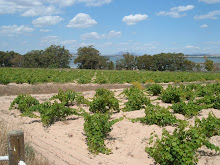
3) Geoff and Sheena reported that cyclists were going off track to bypass a flooded part of the route where we planted shrubs provided by Valencia. This needs to be brought to the attention of the park authorities so that they can improve the track and, hopefully, deter walkers and cyclists from using the planting area as a track.
4) Treasurer's Report - We have a balance of 115.03 Euros in the bank plus 10 Euros in cash. It was suggested that we attempt to open an account with Caja Murcia to avoid paying bank charges and Richard will make further enquiries.
5) The new meeting day, Monday, is not convenient for at least four volunteers. It was suggested that we enquire where other associations meet to ascertain if we can use other premises and meet on our former day of Thursday. It was also suggested that we organise a social event with the Centre staff in order to improve communication.
Date of next meeting - Monday 13th June 2011.
Thursday, 12 May 2011


Wednesday, 30 March 2011
stop press
- At last we have insurance cover for our work in the park! Thank you to Anabel for organising it.
- We raised over 100 euros through the sale of calendars and these funds will be delivered to the orphanage in Elche as soon as possible. Jenny kindly volonteered to go.
- Our colleague Jose Manuel is now a Daddy and a very happy, proud Daddy he is! Our congratulations, JM!,
- Finally on a sad note there has been yet another fire at the park - the police, according to the local papers, suspect a serial arsonist.
Our monthly meetings are now held in the audio-visual room behind the Casa Forestal on the second Monday of each month. La Mata's new square is looking great - minus the building we used to use for our meetings. More room for cafes and pedestrians as the old gives way to the future!
Wednesday, 15 December 2010
Science and Society lectures
On Wednesday 15 December we were invited to a morning of extremely interesting lectures on diurnal butterflies, the biodiversity of our Nature Reserve (under threat) and the artemis - a hugely successful invasive species.
We were each given a beautiful book in colour on butterflies, produced by the Valencia Natural History Museum, as well as a copy of the glossy magazine produced by the Friends of the Wetlands of South Alicante.
The three speakers took questions from a packed room including the park staff, volunteers, and representatives of industry and regional government. The lectures were part of the Jornadas Ciencia y Sociedad events and were translated into English by Maureen.
Despite a late start (the butterflies speaker got lost en route), it was inspiring to be together with our colleagues from the park and to hear park director Conchita praised as the forerunner in bringing together interested parties at a time when collaboration seems to be the only way forward for conservation in the present financial climate when funds are extremely limited.
We learned a great deal about the life cycle of butterflies, the problems facing biodiversity such as the disappearance of species, and the history and spread of the artemis – the tiny prawn lookalike creature so beloved by our local flamingos.
We were each given a beautiful book in colour on butterflies, produced by the Valencia Natural History Museum, as well as a copy of the glossy magazine produced by the Friends of the Wetlands of South Alicante.
The three speakers took questions from a packed room including the park staff, volunteers, and representatives of industry and regional government. The lectures were part of the Jornadas Ciencia y Sociedad events and were translated into English by Maureen.
Despite a late start (the butterflies speaker got lost en route), it was inspiring to be together with our colleagues from the park and to hear park director Conchita praised as the forerunner in bringing together interested parties at a time when collaboration seems to be the only way forward for conservation in the present financial climate when funds are extremely limited.
We learned a great deal about the life cycle of butterflies, the problems facing biodiversity such as the disappearance of species, and the history and spread of the artemis – the tiny prawn lookalike creature so beloved by our local flamingos.
Sunday, 14 November 2010
Title: Project Alien InvAsion: we have to stop it!
Group: ASOCIACIóN RUTAS Y CAMINOS DE LA SAL Y PARQUE NATURAL DE LAS LAGUNAS DE LA MATA Y TORREVIEJA
(http://www.lamataparkvolunteersblogspot.com/)
The Asociación Rutas y Caminos de la Sal is a group of people of different European nationalities, which since its inception has “had as its objective the promotion, diffusion, protection, and conservation of the natural environment of the Natural Park of the Lakes of La Mata and Torrevieja”. (Art.3 Statutes of the Asociación Rutas y Caminos de la Sal)
Since 2004 the volunteers of this association have actively collaborated with the staff of the Natural Park of the Lakes of La Mata and Torrevieja in various tasks such as giving information to visitors, collating catalogues of fauna and flora in various languages, detection of incidences in the areas allocated to public use, or collecting rubbish, amongst many other things.
However it was in 2009 that this environmental volunteer group committed itself to confronting the problems arising from the introduction and expansion of exotic invasive vegetation (VEI) in this Protected Natural Area.(ENP). The project of “Alien Invasion” was launched.
The above project is based mainly in noting not only the causes but also the consequences of the introduction of this type of species into the Park. With this in mind the project is based on two major and indivisible concepts: alerting the local population to and control of the exotic invasive species of vegetation.
To achieve this the staff of the Protected Natural Area (ENP) train the volunteers and plan the work schedule, organising this in four work groups: Communication, Elimination, Posters and Detection and Control.
Since December 2009 until now the volunteers have taken part in 12 activities, which have eliminated some 77 cubic metres of invasive species such as Carpobrotus sp, Yucca alaifolia, Opuntia subulata and Aptenia sp, among others. These actions have resulted in the recuperation of an area of 1650 square metres.
Group: ASOCIACIóN RUTAS Y CAMINOS DE LA SAL Y PARQUE NATURAL DE LAS LAGUNAS DE LA MATA Y TORREVIEJA
(http://www.lamataparkvolunteersblogspot.com/)
The Asociación Rutas y Caminos de la Sal is a group of people of different European nationalities, which since its inception has “had as its objective the promotion, diffusion, protection, and conservation of the natural environment of the Natural Park of the Lakes of La Mata and Torrevieja”. (Art.3 Statutes of the Asociación Rutas y Caminos de la Sal)
Since 2004 the volunteers of this association have actively collaborated with the staff of the Natural Park of the Lakes of La Mata and Torrevieja in various tasks such as giving information to visitors, collating catalogues of fauna and flora in various languages, detection of incidences in the areas allocated to public use, or collecting rubbish, amongst many other things.
However it was in 2009 that this environmental volunteer group committed itself to confronting the problems arising from the introduction and expansion of exotic invasive vegetation (VEI) in this Protected Natural Area.(ENP). The project of “Alien Invasion” was launched.
The above project is based mainly in noting not only the causes but also the consequences of the introduction of this type of species into the Park. With this in mind the project is based on two major and indivisible concepts: alerting the local population to and control of the exotic invasive species of vegetation.
To achieve this the staff of the Protected Natural Area (ENP) train the volunteers and plan the work schedule, organising this in four work groups: Communication, Elimination, Posters and Detection and Control.
Since December 2009 until now the volunteers have taken part in 12 activities, which have eliminated some 77 cubic metres of invasive species such as Carpobrotus sp, Yucca alaifolia, Opuntia subulata and Aptenia sp, among others. These actions have resulted in the recuperation of an area of 1650 square metres.
Sunday, 7 November 2010
Tuesday, 2 November 2010
A group of the Volunteers of La Mata (Asociación de las Rutas y Caminos de la Sal) recently had the opportunity to be taken to Valencia to see an exhibition, which included a huge poster showing the work the Volunteers have done over recent months in the Natural Park of La Mata-Torrevieja.
The group first visited the Research Centre where plants are propagated. A huge tent was full of bigger plants and trees, which had been grown according to the natural conditions in which they live and are being observed for any problems. The procedure for this was explained to us.
We were delighted in the next tent to see small plants, which had been propagated, either from cuttings or from seed, which had been taken from plants at La Mata. These little plants will then come back to La Mata next spring to be used in the re-planting programme in which the Volunteers will once again be involved.
In the laboratories we saw how seeds are taken, dried at different temperatures and investigated for possible germination. We were amazed to find that even a tiny seed has a character all of its own and that some will germinate but not all.
In the dry river bed in Valencia the Exhibition Hall had a number of large posters showing the environmental work which is being done all over Valencia province. This was most interesting as there are many facets of this – restoration of environment, breeding birds, rescuing tortoises and so on. And there we were in several large photos, pulling cat’s claw from areas of the Natural Park! All our back breaking hard work recorded for posterity! It is a good feeling to know that we are taking part in a larger project and doing our best to help safeguard the environment.
The group first visited the Research Centre where plants are propagated. A huge tent was full of bigger plants and trees, which had been grown according to the natural conditions in which they live and are being observed for any problems. The procedure for this was explained to us.
We were delighted in the next tent to see small plants, which had been propagated, either from cuttings or from seed, which had been taken from plants at La Mata. These little plants will then come back to La Mata next spring to be used in the re-planting programme in which the Volunteers will once again be involved.
In the laboratories we saw how seeds are taken, dried at different temperatures and investigated for possible germination. We were amazed to find that even a tiny seed has a character all of its own and that some will germinate but not all.
In the dry river bed in Valencia the Exhibition Hall had a number of large posters showing the environmental work which is being done all over Valencia province. This was most interesting as there are many facets of this – restoration of environment, breeding birds, rescuing tortoises and so on. And there we were in several large photos, pulling cat’s claw from areas of the Natural Park! All our back breaking hard work recorded for posterity! It is a good feeling to know that we are taking part in a larger project and doing our best to help safeguard the environment.
Sunday, 24 October 2010
The Volunteers of La Mata Natural Park were invited on the 18th of October to a talk given by Vicente del Toro, who is responsible for the management of invasive plants of Valencia, which clarified the objective of the group in their task of removing invasive plants from the Park de La Mata.
It was explained that according to Decree 213/2009 of 2009 actions were being taken to regulate the native species that are to be found in our area. This regulation prohibits the spread of invasive plants by any means into the Valencia Community.
The reasons for this are clear: plants and animals from other parts of the world are dangerous and can annihilate the native species in most cases. It is now illegal for the garden centres to sell plants that are on the list of forbidden plants. If customers know plants are of the invasive type and find garden centres selling them, they should notify the police who will then fine the people involved. The garden centres have been notified of the new regulations. The army has been drafted in to assist the wardens who are trained to recognise the invasive plants, in the enormous task of clearing Valencia Community from this menace.
Councils that have planted this type of plant – we’ve seen them all on the roadsides! – now have a list of what is allowed and what not, and must now remove them. Originally they were planted to make the edges of canals and roads more attractive and were then dispersed by water or the wheels of cars. Cat’s Claw is one of the worst and is most noticeable along the cost of the province.
The reasons for the campaign are clear. Plants from other countries take over from the native plants and wipe out the native species because they are often stronger, have different diseases, or change the chemical balance in the soil to suit them and create their own microclimate in which the native species cannot survive. These unwelcome plants can arrive from various sources. A type of plant used in aquariums has ‘escaped’ because of people throwing it away into rivers or lakes – it then takes over the whole waterway. The best known of these is the Water Hyacinth.
Animals too have caused huge problems, the worst of these being the Florida terrapin, which was bred and sold in huge numbers for sale to the EU in the 1980’s and 1990’s. When their owners became tired of them many were released into the wild with the result that they have driven the native terrapin almost to extinction. The invasive animals can carry a fungus that is fatal to the native species. Many exotic ‘pets’ are now being released into the wild with dreadful results.
If anyone should want to know more about this the following website is available: invasoras@gva.es. The staff at the Centre of the Park at La Mata will also be glad to help.
There is also information on how to have a garden made up of native plants as an alternative to imported ones. The main entry of the invasive plants has been via gardens, as has happened in all of Europe. However there are many alternatives.
The website for these alternatives is:
http://cma.gva.es/jardineria
If you see a gang of ex-pats digging and pulling up plants in the Natural Park, now you know why! We’d be glad to have more help and our blog is: lamataparkvolunteers.blogspot.com
It was explained that according to Decree 213/2009 of 2009 actions were being taken to regulate the native species that are to be found in our area. This regulation prohibits the spread of invasive plants by any means into the Valencia Community.
The reasons for this are clear: plants and animals from other parts of the world are dangerous and can annihilate the native species in most cases. It is now illegal for the garden centres to sell plants that are on the list of forbidden plants. If customers know plants are of the invasive type and find garden centres selling them, they should notify the police who will then fine the people involved. The garden centres have been notified of the new regulations. The army has been drafted in to assist the wardens who are trained to recognise the invasive plants, in the enormous task of clearing Valencia Community from this menace.
Councils that have planted this type of plant – we’ve seen them all on the roadsides! – now have a list of what is allowed and what not, and must now remove them. Originally they were planted to make the edges of canals and roads more attractive and were then dispersed by water or the wheels of cars. Cat’s Claw is one of the worst and is most noticeable along the cost of the province.
The reasons for the campaign are clear. Plants from other countries take over from the native plants and wipe out the native species because they are often stronger, have different diseases, or change the chemical balance in the soil to suit them and create their own microclimate in which the native species cannot survive. These unwelcome plants can arrive from various sources. A type of plant used in aquariums has ‘escaped’ because of people throwing it away into rivers or lakes – it then takes over the whole waterway. The best known of these is the Water Hyacinth.
Animals too have caused huge problems, the worst of these being the Florida terrapin, which was bred and sold in huge numbers for sale to the EU in the 1980’s and 1990’s. When their owners became tired of them many were released into the wild with the result that they have driven the native terrapin almost to extinction. The invasive animals can carry a fungus that is fatal to the native species. Many exotic ‘pets’ are now being released into the wild with dreadful results.
If anyone should want to know more about this the following website is available: invasoras@gva.es. The staff at the Centre of the Park at La Mata will also be glad to help.
There is also information on how to have a garden made up of native plants as an alternative to imported ones. The main entry of the invasive plants has been via gardens, as has happened in all of Europe. However there are many alternatives.
The website for these alternatives is:
http://cma.gva.es/jardineria
If you see a gang of ex-pats digging and pulling up plants in the Natural Park, now you know why! We’d be glad to have more help and our blog is: lamataparkvolunteers.blogspot.com
Subscribe to:
Posts (Atom)